Phoenix Fire & Systems
A commercial building usually needs recurring inspection, testing, and maintenance across more than one fire protection system, each on its own clock. This page is a high-level calendar: what tends to fall monthly, annually, and on longer intervals, with links to the system guides.
Ohio points portable extinguishers to NFPA 10, water-based systems to NFPA 25, and fire alarms to NFPA 72. Fire-line containment backflow follows OAC 3745-95-06, at least every 12 months. Cameras and access control are not on these NFPA or water-supplier schedules.
Not every building has every system. Skip the rows that are not on site.
Monthly and other frequent work
Portable fire extinguishers need a visual check about every 30 days. The owner or building staff does that walk: portable fire extinguisher inspection.
Water-based sprinkler systems have frequent valve, gauge, and condition visuals under NFPA 25. That is not one rule that every sprinkler is due monthly. The owner or trained staff keep those checks between contractor visits: NFPA 25 sprinkler inspection.
If the building has a fire pump, the no-flow (churn) test is commonly weekly for diesel and monthly for electric. A person qualified for that work runs it. Very few owners or staff are. It is not the annual flow test: fire pump testing.
Annual work
Extinguisher annual maintenance is once a year by a person certified to do that work. Hydrostatic testing is not annual.
Sprinkler annual ITM covers the floor-level inspection, the main drain test, and the written record. It does not replace the frequent visuals.
Fire alarm inspection and testing follows the device. Annual inspection and testing is done by a person qualified for that work: commercial fire alarm inspection.
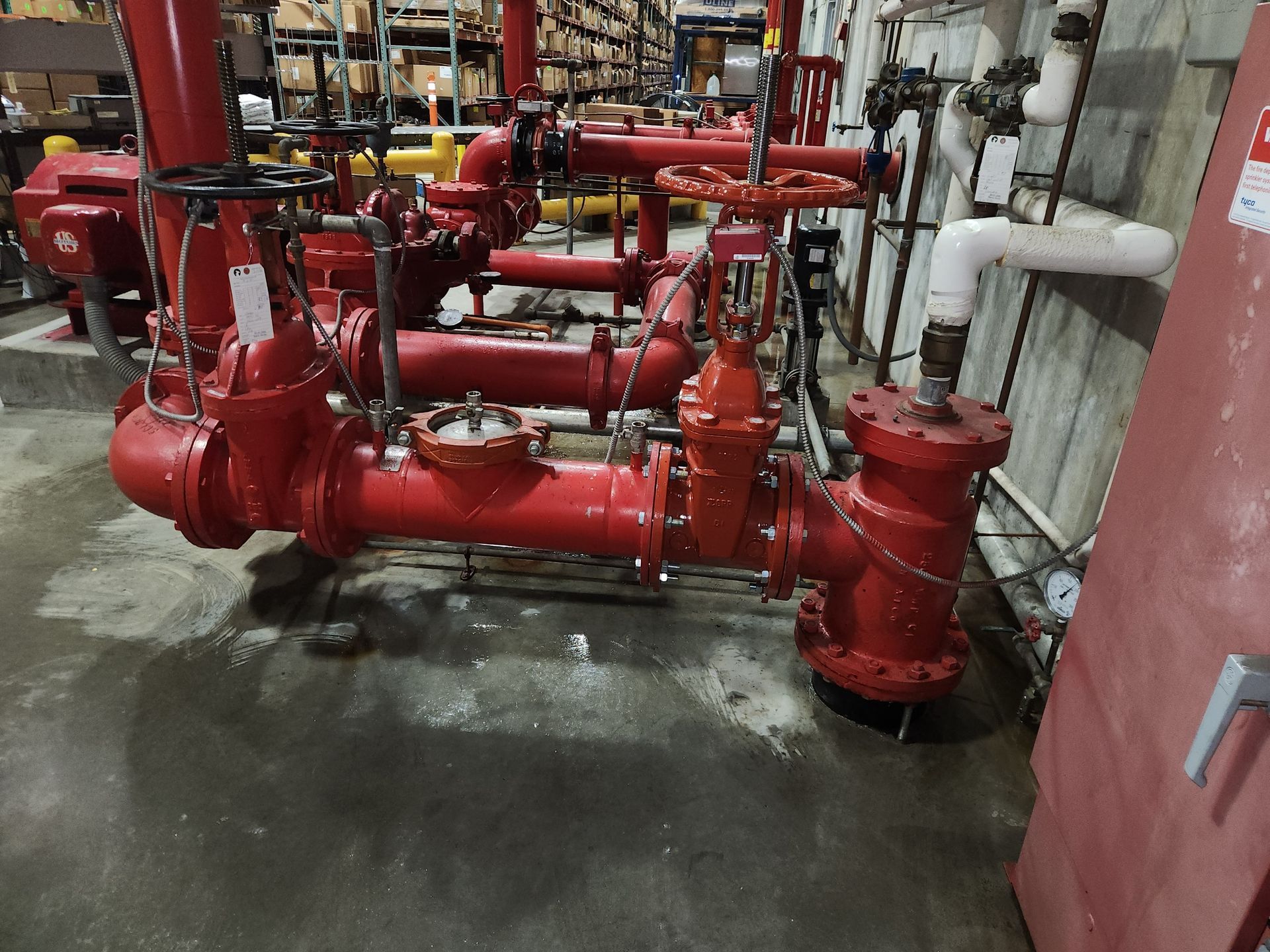
Fire-line backflow gets a thorough inspection and operational test at installation or repair, and at least every 12 months. That water-supplier test is separate from the annual NFPA 25 forward-flow test: fire-line backflow testing.
If the building has a fire pump, the annual flow test is done by a person qualified for that work. The weekly or monthly churn needs a qualified person too. Put both on the service agreement.
Private fire hydrants get an annual operational flow: open, flow until clear, lubricate as required. That is not an NFPA 291 rated-capacity test: private fire hydrant inspection.
Longer intervals
Extinguisher internal exams and hydrostatic tests follow type-dependent intervals, commonly discussed as 6-year, 5-year, or 12-year work. The technician tracks which unit is due.
Sprinkler systems have longer-interval items under NFPA 25, including internal pipe assessment commonly every 5 years. Dry-pipe full-flow trip tests are commonly every 3 years.
Private fire service mains get a flow test about every 5 years.
Ohio standards, short
The 2025 Ohio Fire Code took effect November 20, 2025. Table 901.6.1 points portable extinguishers to NFPA 10, water-based systems to NFPA 25, and fire alarm systems to NFPA 72. The Ohio Fire Code is the statewide minimum. A city or township that adopts its own fire rules can add requirements that meet or exceed it. Detail for each system is on the linked guides.
Section 901.6.4 requires an annual inspection tag on each fire protection system. What that tag records, and how an impairment tag is different, is on Ohio annual inspection tags.
A fire department inspection runs on that department's own cycle. That visit is not the NFPA or water-supplier ITM. Keep both tracks current.
What the owner does
The building owner or designated representative owns the calendar. Hiring a contractor does not move that duty off the owner: building owner sprinkler ITM.
Inventory the systems on site. Pull the last annual tags, ITM reports, and backflow test records. Put overdue annual items first. Put extinguisher visuals into the facility routine. Put pump churn on the contractor schedule unless a person who is already qualified for that work is on staff. Keep water-authority notice deadlines separate from the fire ITM dates.
Staff can do the visual readiness checks when they are trained for that work. Annual maintenance, annual flow tests, panel or controller work, recharge, and repairs stay with a person certified or qualified for that work. Do not open a fire alarm panel or a fire pump controller.
In a fire, call 911. For a non-emergency scheduling or system problem, call a contractor.
Phoenix Fire & Systems can put these commercial inspections on one schedule. Call (937) 637-7768, or see all services and request a quote.