Phoenix Fire & Systems
Commercial fire pumps need two tests: a no-flow (churn) test, commonly weekly for diesel and monthly for electric, and an annual flow test. Annual fire pump inspection, testing, and maintenance, including that flow test, does not replace the churn. Both need a person qualified for that work.
NFPA 25 is the book for inspection, testing, and maintenance of water-based systems after they are in service. Fire pumps sit in that book on their own schedule, Chapter 8. NFPA 20 is the installation book. Sprinklers are the same NFPA 25 family, on a different schedule: NFPA 25 sprinkler inspection.
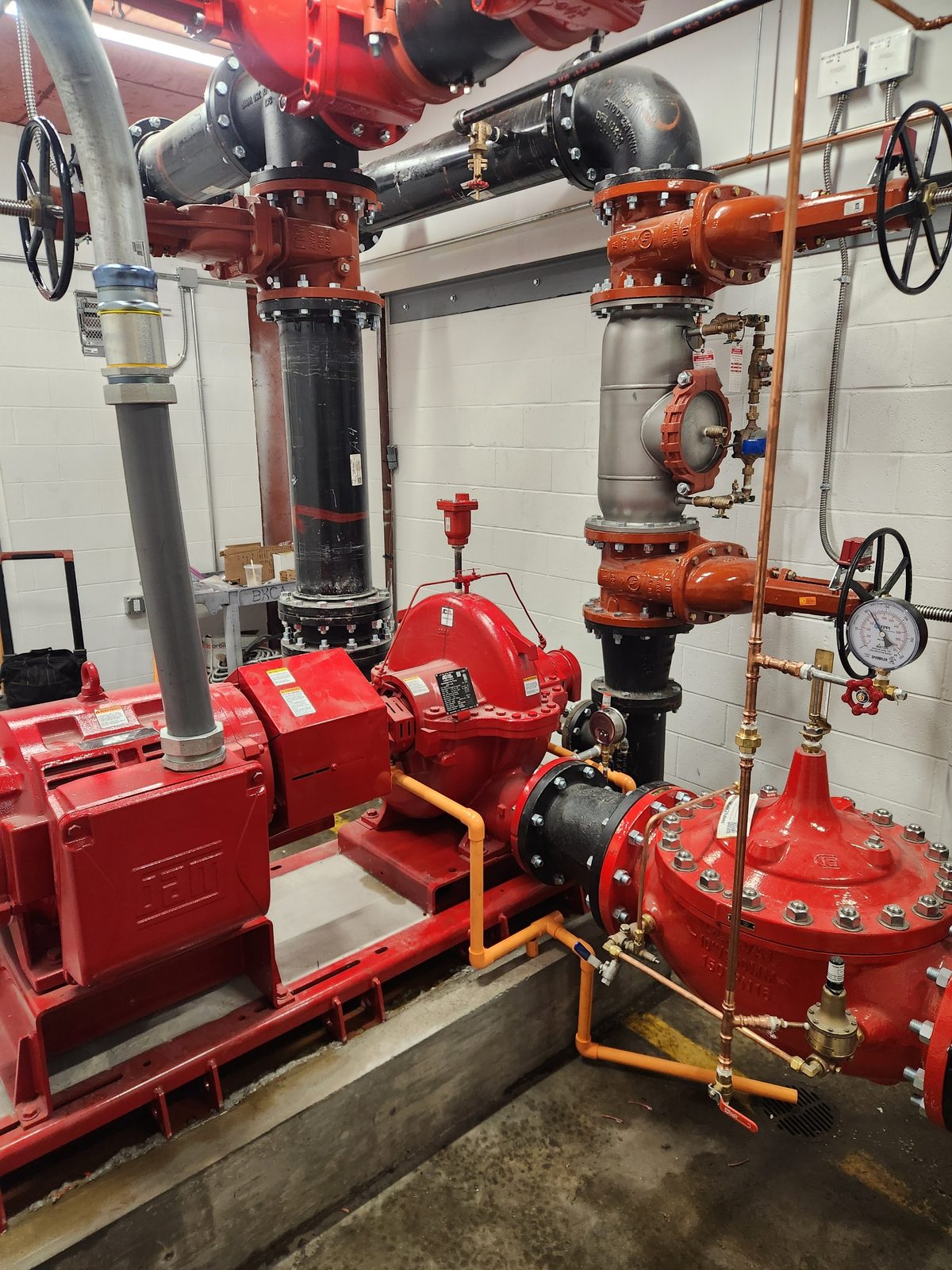
A no-flow (churn) test starts the pump automatically, from a drop in system pressure, not from the controller start button alone. The pump runs without flowing water through the sprinkler or standpipe system. The point is that it starts and does not overheat. Record suction and discharge pressure. Watch packing, noise, vibration, and heat. Where the pump has a circulation relief valve, see that it discharges. On a diesel pump, watch crank time, oil pressure, temperature, and cooling water flow. On an electric pump, watch it come up to speed.
A diesel fire pump churn is commonly weekly. An electric fire pump churn is commonly monthly. Some electric pumps stay on a weekly churn. Which frequency applies depends on the pump, the suction supply, and the building. Confirm that with the person who does the annual test and with the fire code official. Do not move a diesel pump off a weekly churn on your own. An approved risk analysis can set another frequency. That approval is not a staff shortcut.
The annual flow test flows water through approved test devices. The points are churn, 100% of rated capacity, and 150% of rated capacity. A person qualified for that work runs the test and compares the results with the pump data and with earlier tests. A variable-speed pump has more flow points than that set. The person doing the test follows Chapter 8 for those points. The churn between visits is a start check. It is not this performance test.
A pressure-maintenance pump, often called a jockey pump, holds everyday system pressure. It is related equipment. It is not the fire pump on this schedule.
Ohio and NFPA 25
Ohio adopts NFPA 25 (2023) for inspection, testing, and maintenance of water-based fire protection systems (sprinklers, standpipes, fire pumps, and related equipment). The 2025 Ohio Fire Code took effect November 20, 2025. Table 901.6.1 in OAC 1301:7-7-09 points water-based fire protection systems to NFPA 25. The owner is responsible for having that work done. The no-flow churn and the annual flow test both need a person qualified for that work. Very few building owners or staff are. Put the churn on the service agreement so it does not sit with an unqualified person. The Ohio Fire Code is the statewide minimum. A city or township that adopts its own fire rules can add requirements that meet or exceed it.
Each fire protection system needs an annual inspection tag under section 901.6.4, near the main control valve, the main panel, or another spot the fire code official accepts. The tag shows who did the work and the state fire marshal installer certification number when that applies, the date of the test, the results, and whether deficiencies or impairments were noted. Section 901.7 covers taking the system out of service.
A fire department inspection runs on the fire department's own cycle. It is not the NFPA 25 ITM, which the owner still keeps current.
What the owner does
Keep the churn log. The annual visit does not fill in the weeks that were skipped. A person who is already qualified for that work can run the churn. Very few owners or staff are. Put it on the service agreement. Do not leave an untrained person to run a diesel fire pump alone. Do not open the controller.
Between visits, look at the pump room. Heat should match the pump type. Louvers should move. There should be no standing water, and the coupling guard should be in place. Suction, discharge, and bypass valves should be open. Gauges should read in range. On a diesel pump, fuel should be at least about two-thirds of the tank. The controller should be in automatic. Power and transfer-switch indications should look normal.
A pump that did not start, a trouble or supervisory signal on the controller, a closed valve, a leak, or low fuel is a call, not a wait until the annual test. Keep the churn logs and the annual report where the fire code official or the insurer can see them.
In a fire, call 911. For a non-emergency problem with the pump, call a contractor. Do not take the system out of service on your own.
Phoenix Fire & Systems does commercial fire pump inspection, testing, and maintenance, including the no-flow churn when it is on the service agreement, and the annual flow test. Call (937) 637-7768, or see fire pump service and request a quote.