Phoenix Fire & Systems
Under NFPA 25, the building owner or designated representative is responsible for fire sprinkler inspection, testing, and maintenance, and for impairment management. Hiring a contractor does not move that duty off the owner.
A designated representative can be an occupant, a management firm, or a managing individual when the lease, a written use agreement, or the management contract says so. Weekly and monthly visual checks stay with the owner or trained staff unless the contract says otherwise. A person qualified for that work does the annual ITM, the repairs, and the written record. How often each item is due is on NFPA 25 sprinkler inspection.
Ohio and NFPA 25
Ohio adopts NFPA 25 (2023) for inspection, testing, and maintenance of water-based fire protection systems (sprinklers, standpipes, fire pumps, and related equipment). The 2025 Ohio Fire Code took effect November 20, 2025. Table 901.6.1 in OAC 1301:7-7-09 points water-based fire protection systems to NFPA 25. The owner is responsible for having that work done. The Ohio Fire Code is the statewide minimum. A city or township that adopts its own fire rules can add requirements that meet or exceed it.
Annual inspection, testing, and maintenance has to be done by a person qualified for that work. Noticing a closed valve and calling does not.
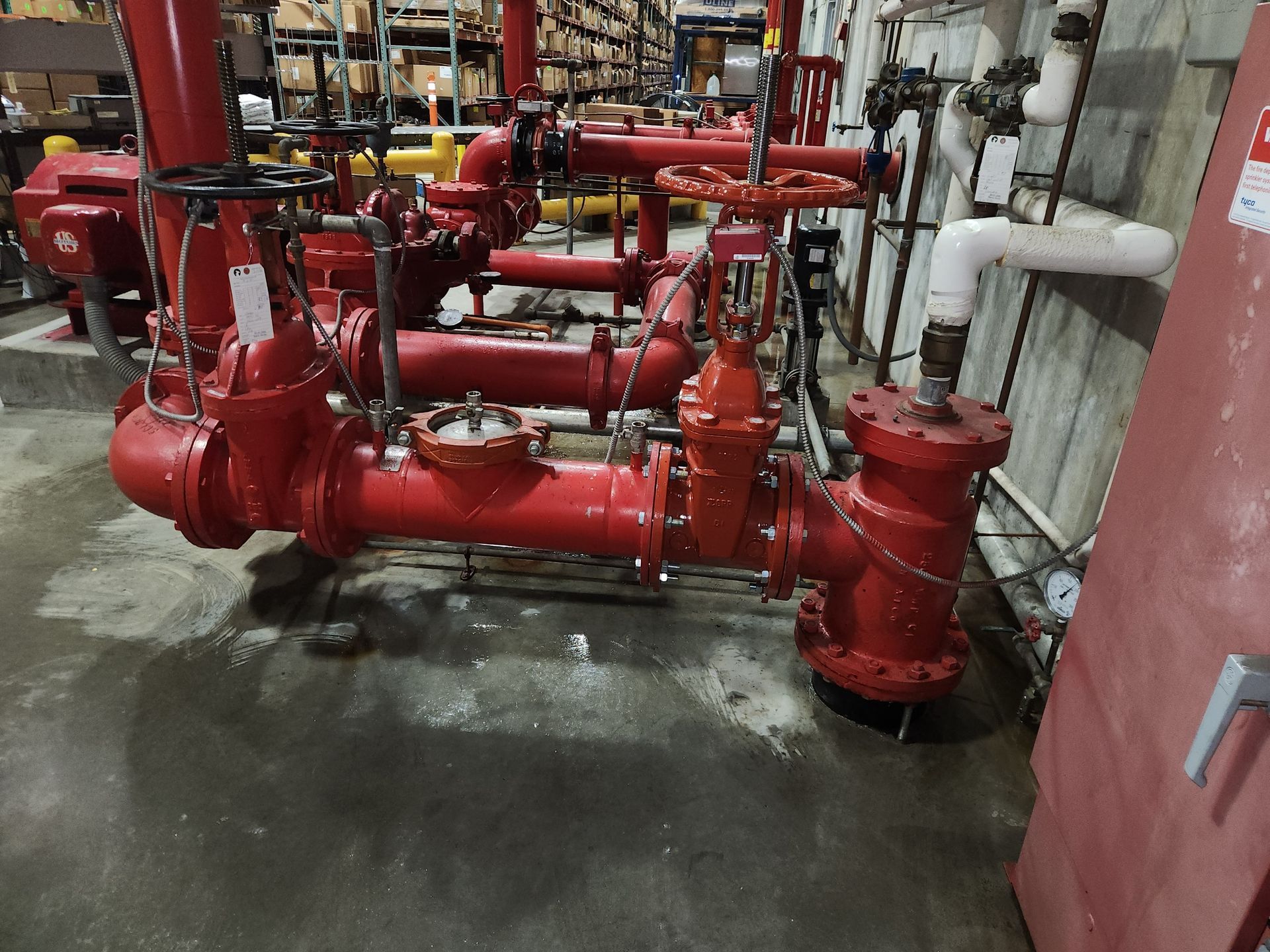
Each fire protection system needs an annual inspection tag under section 901.6.4, near the main control valve or another spot the fire code official accepts. The tag shows who did the work and the state fire marshal installer certification number when that applies, the date of the test, the results, and whether deficiencies or impairments were noted. If a sprinkler or standpipe system is impaired or out of service, section 901.6.4.1 calls for an impairment tag under NFPA 25.
If a required system is out of service, notify the fire department and the fire code official immediately. Fire watch or evacuation may be required under section 901.7. The building owner assigns an impairment coordinator. If none is designated, the owner is the impairment coordinator under section 901.7.1.
A fire department inspection runs on the fire department's own cycle. It is not the NFPA 25 ITM, which the owner still keeps current.
What the owner does
See that the ITM actually happens. Valve, gauge, and access checks between visits are not the annual inspection. Trained staff can see that control valves are open, gauges read in range, and the riser, valves, and fire department connection are easy to reach. Do not pile stock in front of a valve or block a cabinet.
Before a test or a shutdown, the owner or designated representative notifies the fire code official, the fire department if required, and the alarm-receiving facility. Notify them again when testing is done, so the next alarm is treated as real.
Keep ITM records, on paper or electronic, where the fire code official can see them on request. Some places want the report turned in. Others look at it during their own inspection. Ask which one applies.
An impairment means the system, or part of it, will not work in a fire. A deficiency is a problem that still needs correction. Get both corrected. Repairs follow the standard that governs that work. Do not take the system out of service on your own.
A closed valve, a leak, a damaged head, or freeze damage is a call, not a wait until the next annual visit. Where water-filled piping has no other freeze protection, keep those spaces from freezing.
When the building changes, the sprinkler system may no longer match the hazard. Common changes are occupancy, the process or materials, the layout, the heating, how goods are stored (method, height, or commodity), and the water supply. Have that evaluated. Do not redesign the system yourself.
When a test discharges water, know where the drains are and what sits around them so the water goes where you expect.
If you just bought the building, or you have a deficiency letter, find the date on the annual tag, the last ITM report, and who last did the work. Confirm who the impairment coordinator is. Walk the riser, the control valves, and the fire department connection.
In a fire, call 911. For a non-emergency problem with the system, call a contractor.
Phoenix Fire & Systems does the annual sprinkler ITM and repairs the owner is responsible for having done. Call (937) 637-7768, or see fire sprinkler service and request a quote.