Phoenix Fire & Systems
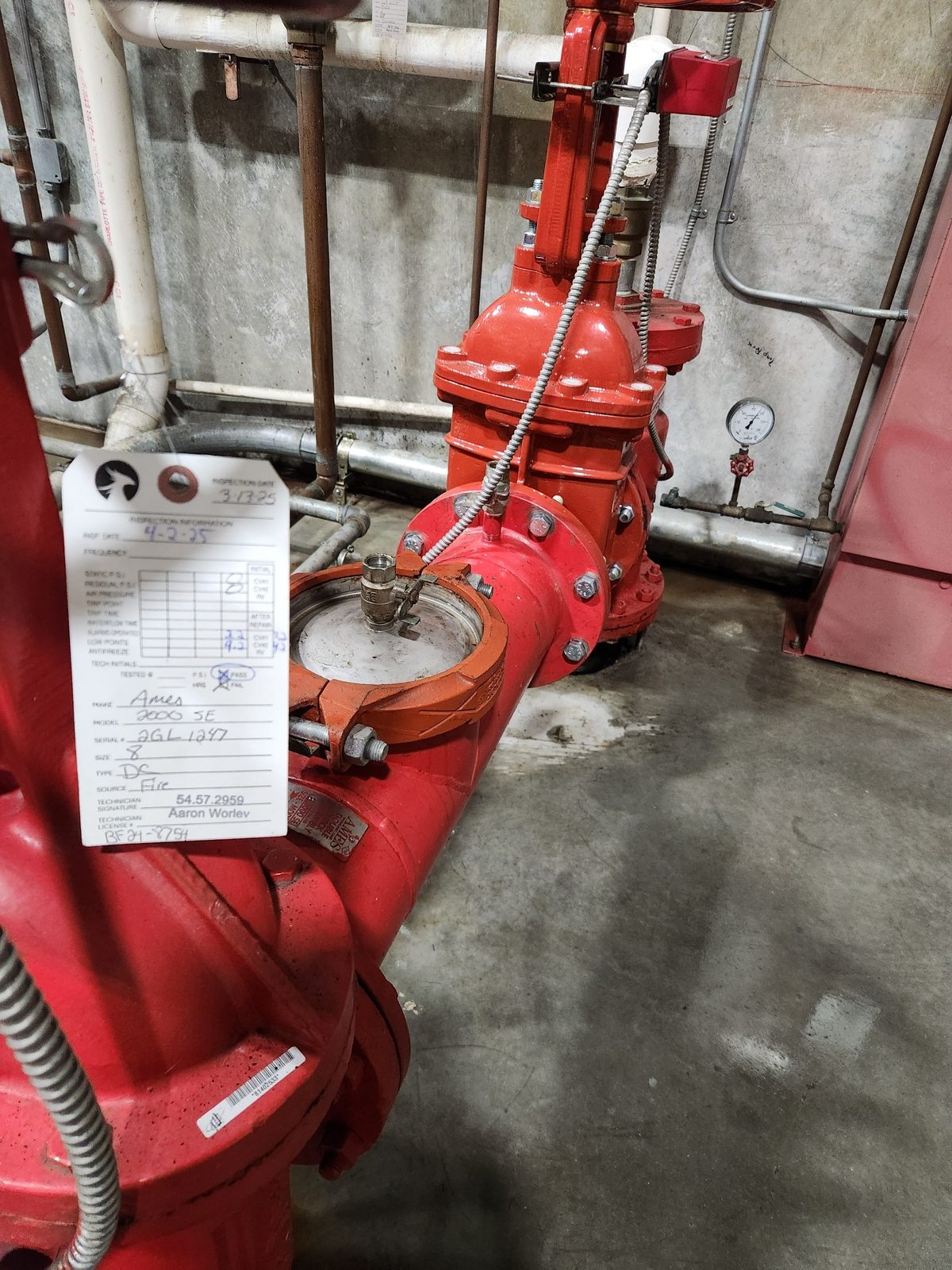
A commercial fire-line backflow preventer in Ohio is thoroughly inspected and operationally tested at installation or repair, and at least every 12 months. That water-supplier test is separate from the annual NFPA 25 forward-flow test of the same assembly.
The 12-month test is the performance test for the water supplier. The water consumer pays for it. A person the water supplier accepts, and who is acceptable to the Ohio EPA director as qualified, does the test. The written record goes to the water supplier and stays in the building file. That record is for the water supplier. It is not an NFPA certification.
The forward-flow test is annual. It shows the fire system can still move water through the assembly. It does not take the place of the water-supplier test. Sprinkler inspection, testing, and maintenance is its own schedule: NFPA 25 sprinkler inspection.
A fire-line assembly sits on the fire service line and keeps water in the fire system from flowing back into the public water supply. An irrigation device or a domestic isolation device is a different device.
If the assembly fails, the consumer pays to repair, overhaul, or replace it, and then it is tested again. A failed test is not a passing annual test. The visit can mean isolating part of the fire line. Coordinate that with building operations before the water is shut off.
Ohio backflow rule
Ohio's rule for a required containment backflow preventer is OAC 3745-95-06, effective October 10, 2022. The water consumer has the assembly thoroughly inspected and operationally tested at installation or repair, and at least once every twelve months. The supplier of water or the Ohio EPA director can require the test more often. The water consumer pays. The test is done by a person approved by the supplier of water and acceptable to the Ohio EPA director as qualified to inspect and test backflow preventers. If the assembly is defective, it is repaired, overhauled, or replaced at the consumer's expense. The consumer keeps the records and makes them available to the supplier of water. The supplier of water keeps that documentation at least five years.
The supplier of water keeps authority over the containment assembly and sees that the required tests are made.
What the owner does
Read the notice for the due date, the address, and which assembly it names. If the building has more than one device, confirm the notice is for the fire-line assembly. Schedule a person the water supplier accepts. Keep the written test record and any repair invoice where the water supplier or the insurer can see them. A leak or a failed test means repair and a retest, not a wait until next year. Keep the assembly easy to reach and protected from freezing. If the test means isolating the fire line, tell building operations first. Do not take the fire protection system out of service on your own.
In a fire, call 911. For a non-emergency problem with the assembly, call a contractor.
Phoenix Fire & Systems does commercial fire-line backflow testing. Call (937) 637-7768, or see backflow testing and request a quote.