Phoenix Fire & Systems
Ohio commercial fire sprinklers are inspected, tested, and maintained on an NFPA 25 schedule, not on a single annual visit. The building owner stays responsible for that ITM, including the visual checks between contractor visits.
NFPA 25 is the book for inspection, testing, and maintenance of water-based systems after they are in service. NFPA 13 is the installation book. Portable fire extinguishers follow a different schedule: portable fire extinguisher inspection.
Staff do the frequent visuals. A contractor does the annual inspection, the main drain test, trip tests where the system type requires them, repairs, and the written record.
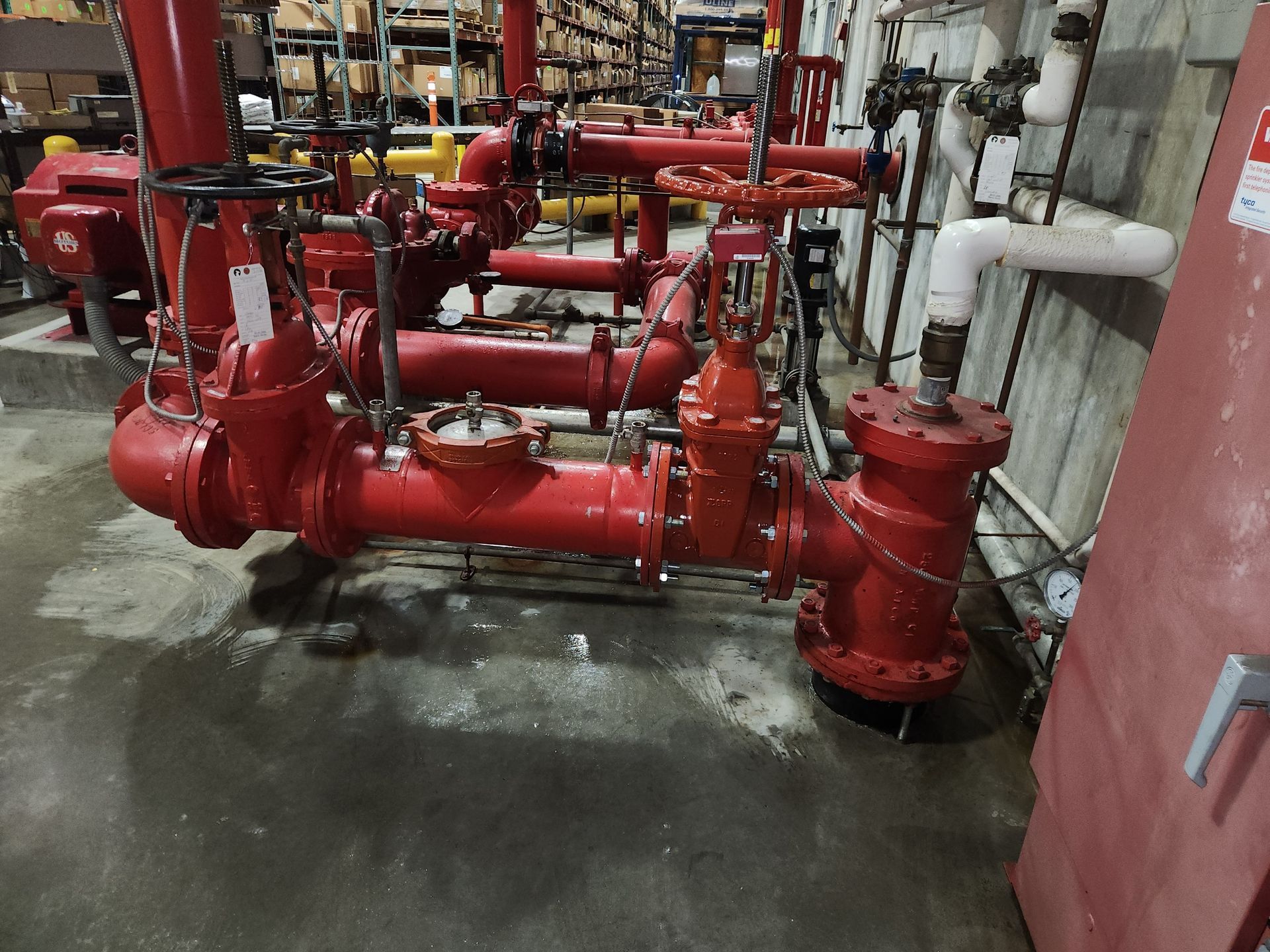
The annual inspection looks at sprinklers, pipe, fittings, hangers, signs, and the spare-sprinkler cabinet from the floor. The annual main drain test is at each water-supply riser. If the only supply runs through a backflow preventer or a pressure-reducing valve, that main drain test is due more often than once a year. Dry and preaction systems add an annual trip test. A full-flow dry-pipe trip test is commonly every 3 years. An internal pipe assessment is commonly every 5 years. Gauges, control valves, waterflow devices, and the fire department connection also have weekly, monthly, or quarterly checks. Those sit with the owner or trained staff unless the contract says otherwise. The annual visit does not take their place.
The technician should track which longer-interval items are due next, not only hang a yearly tag.
Ohio and NFPA 25
Ohio adopts NFPA 25 (2023) for inspection, testing, and maintenance of water-based fire protection systems (sprinklers, standpipes, fire pumps, and related equipment). The 2025 Ohio Fire Code took effect November 20, 2025. Table 901.6.1 in OAC 1301:7-7-09 points water-based fire protection systems to NFPA 25. The Ohio Fire Code is the statewide minimum. A city or township that adopts its own fire rules can add requirements that meet or exceed it.
Each fire protection system needs an annual inspection tag under section 901.6.4, near the main control valve or another spot the fire code official accepts. The tag shows who did the work and the state fire marshal installer certification number when that applies, the date of the test, the results, and whether deficiencies or impairments were noted. If a sprinkler or standpipe system is impaired or out of service, section 901.6.4.1 calls for an impairment tag under NFPA 25. Section 901.7 covers taking the system out of service.
A fire department inspection runs on the fire department's own cycle. It is not the NFPA 25 ITM, which the owner still keeps current.
What the owner does
Know the system type and the date on the annual tag. Keep control valves in the correct position and easy to reach. Keep the fire department connection clear. Keep storage below the sprinkler deflectors. Write down the visual checks staff actually do. A closed valve, a leak, low air on a dry system, a damaged head, or a note from the fire code official is a call-now item. Keep the ITM records where the fire code official or the insurer can see them.
In a fire, call 911. For a non-emergency problem with the system, call a contractor. Do not take the system out of service on your own.
Phoenix Fire & Systems does commercial sprinkler inspection, testing, maintenance, and repair. Call (937) 637-7768, or see fire sprinkler service and request a quote.