Phoenix Fire & Systems
A fire marshal inspection is a walk-through of the building and its records. It runs on the fire department's own cycle. Your fire protection contractor's inspection, testing, and maintenance is a separate job on separate schedules. One does not replace the other.
Two different jobs
The fire department inspector looks at the building as it is that day: exits, storage, equipment, and records.
Your contractor does inspection, testing, and maintenance, called ITM, on the systems themselves. That means operating devices, flowing water, checking components, and writing an inspection report that lists any deficiencies. Those schedules are on the commercial fire protection inspection calendar.
The inspector usually does not test the sprinkler system or set off the fire alarm system. The inspector looks for records showing that a person qualified for that work did.
What inspectors commonly look at
Each fire department runs its own inspections. These items come up often:
- Exits. Exit doors open freely and exit paths are clear.
- Exit signs and emergency lights. Signs are lit and emergency lights work.
- Portable fire extinguishers. Extinguishers are in place, mounted, easy to reach, and inspected. For timing, see portable fire extinguisher inspection.
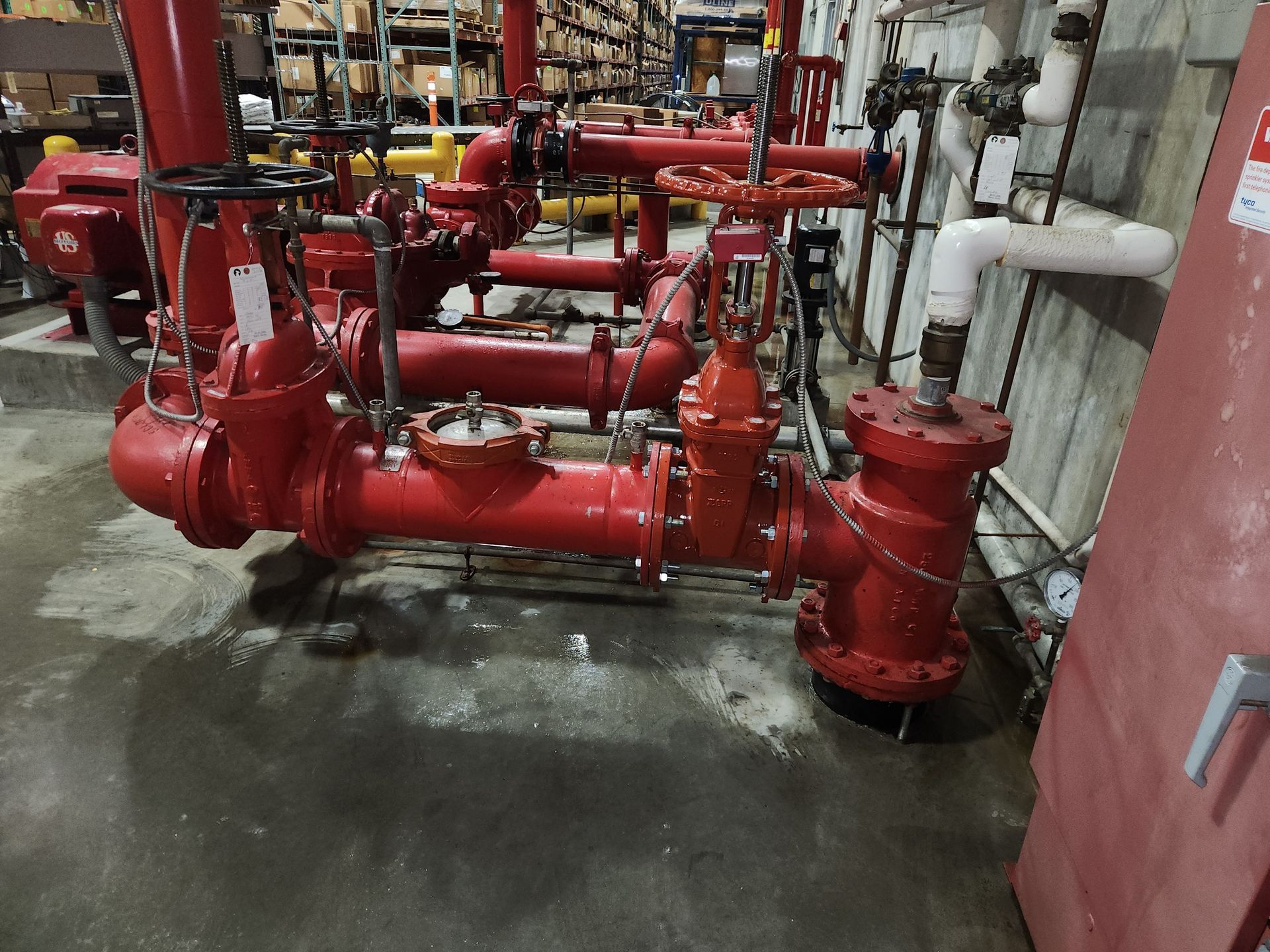
- Sprinkler clearance. Storage stays clear of sprinkler heads, and risers and control valves are easy to reach. For the ITM schedule, see NFPA 25 sprinkler inspection.
- Fire alarm panel. The panel shows normal, with no trouble or supervisory signals, and nothing blocks it. For alarm testing, see fire alarm inspection under NFPA 72.
- ITM records. Current inspection and testing records for each system are on hand.
- Storage and housekeeping. Combustibles are under control, electrical panels are clear, and storage is orderly.
Records connect the two
Where the two jobs meet is paperwork. The inspector wants to see that the contractor work is current and that deficiencies were fixed. A deficiency on your last report that was never fixed will likely come up.
Keep reports for each system in one place, by system and date. Note what was corrected and when. What the annual tag shows is on inspection tags and impairments.
What the owner does
- Keep ITM current, so the testing is done before the inspector arrives, not after.
- Fix deficiencies from contractor reports, and keep proof of the repair.
- Walk the building with the list above. Clear blocked exits, move storage away from sprinkler heads and panels, and have dead exit signs and emergency lights repaired.
- Look at the fire alarm panel. If a trouble or supervisory signal is showing, call your contractor. Do not open the panel.
- Make sure staff know where the records are in case you are out that day.
If a system is out of service, do not wait for the inspection to find it. Call your contractor now.
In a fire, call 911. For a non-emergency problem with a system, call a contractor.
Phoenix Fire & Systems does the inspection, testing, and repair work on sprinkler, fire alarm, and portable fire extinguisher systems, and leaves the written report with the building. Call (937) 637-7768, or see fire sprinkler service, fire alarm service, and request a quote.