Phoenix Fire & Systems
Winterize a commercial dry-pipe sprinkler system before the first freeze by keeping the valve and riser room heated, draining low-point and auxiliary drains, and having a person qualified for that work confirm air pressure and system readiness. Dry-pipe piping normally holds air or nitrogen, not water, but freeze risk still sits at low points, in the valve room, and after a trip or a partial fill.
A wet-pipe system keeps water in the pipes at all times. A dry-pipe system keeps that water behind the dry-pipe valve until a head opens. That design protects unheated warehouses, parking garages, loading docks, and similar commercial spaces. It does not mean the system is freeze-proof. Condensation, leftover water in traps after a trip, and water-filled equipment in a cold valve room can still freeze and take the system out when you need it.
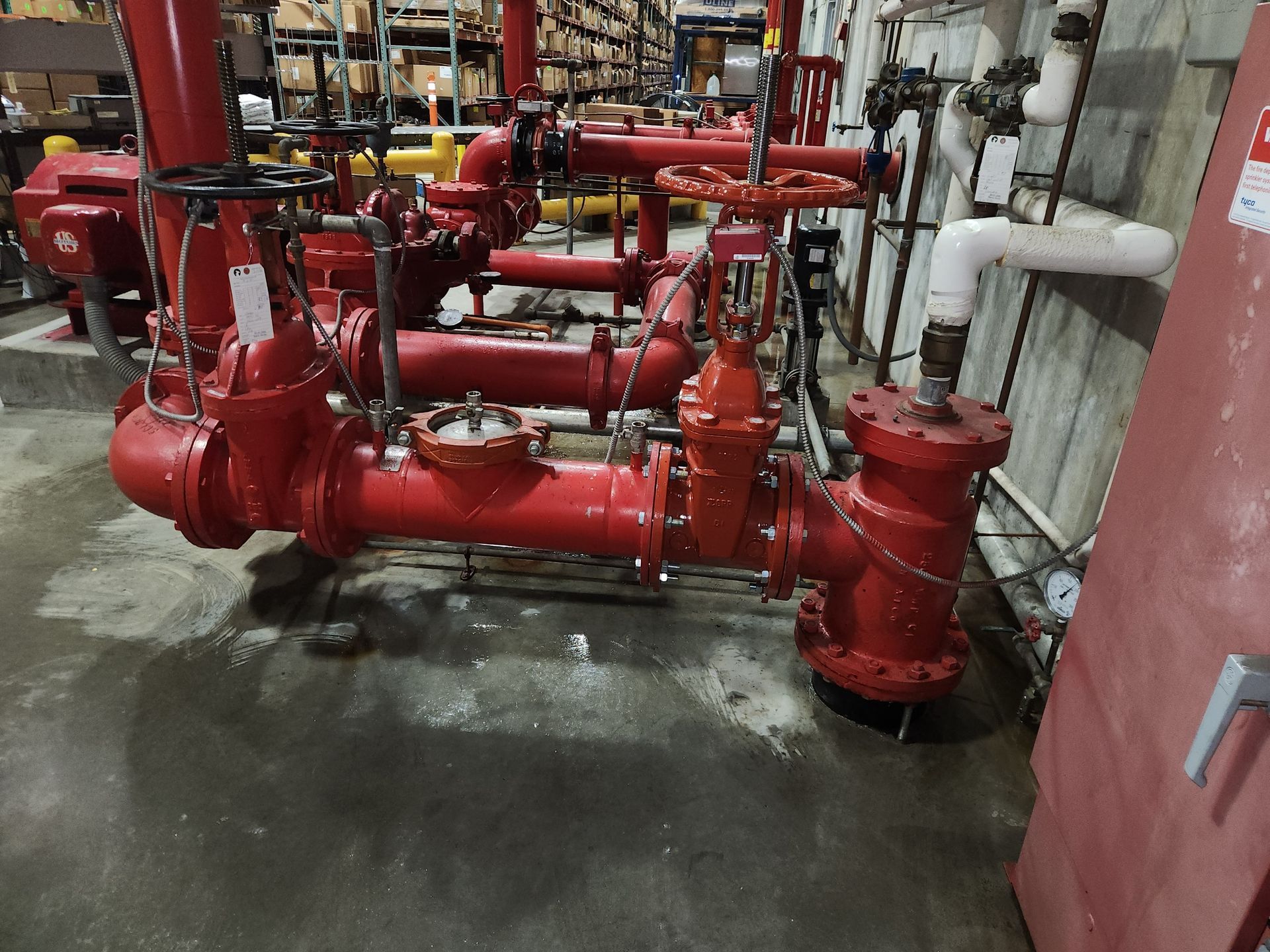
Heat the valve and riser room
NFPA 25 requires the owner to keep water-filled sprinkler piping at 40°F (4°C) or warmer unless an approved antifreeze solution is used. On a dry-pipe system, the enclosure around the dry-pipe valve must also stay at 40°F (4°C) or warmer. Confirm heat in those spaces with your contractor before cold weather. Do not shut the heat off overnight to save money if the dry-pipe valve, gauges, or related water-filled parts sit in that room.
Clear the path to the riser, control valves, gauges, and the fire department connection. Stock piled in front of a valve or a drain is not freeze protection.
Drain the low points before freezing weather
Low-point and auxiliary drains, often called drum drips, collect water that settles in the piping. Drain them on the schedule your contractor sets, and do it before freezing weather arrives. Do not leave standing water in those traps. After a trip test or an accidental trip, water may sit in places that stayed dry the rest of the year. That is a call for the contractor, not a wait until spring.
Staff can keep access open and report a gauge that looks wrong, a low-air signal, or a room that will not hold heat. They do not redesign the drain schedule or run a trip test on their own.
What the owner does, and what the contractor does
The building owner or designated representative stays responsible for inspection, testing, and maintenance: building owner sprinkler ITM. Owner or trained staff keep heat on, keep access clear, watch gauges and alarms, and call when freeze risk shows up. A person qualified for that work does the ITM, the trip testing where the system type requires it, the repairs, and the written record.
This page is pre-freeze prep, not the full NFPA 25 calendar. What is due annually and on longer intervals is on NFPA 25 sprinkler inspection. How those dates sit next to other fire systems is on the commercial fire protection inspection calendar.
Ohio adopts NFPA 25 (2023) for inspection, testing, and maintenance of water-based fire protection systems. The 2025 Ohio Fire Code took effect November 20, 2025. The Ohio Fire Code is the statewide minimum. A city or township that adopts its own fire rules can add requirements that meet or exceed it.
Antifreeze sprinkler systems are a different layout and a different winter conversation. They are not covered here.
In a fire, call 911. For a non-emergency freeze risk, low air, or a dry-pipe service question, call a contractor. Do not take the system out of service on your own.
Phoenix Fire & Systems does commercial dry-pipe sprinkler inspection, testing, maintenance, and repair. Call (937) 637-7768, or see fire sprinkler service and request a quote.